

Don’t Risk Your Academic Record
Use our AI detector and make sure you turn in authentic papers for all your tasks.
Key Takeaways
- Colleges rarely trust a single detector. Turnitin shows up most often, while AI Scanner, GPTZero, Copyleaks, Originality.AI, and Winston AI are used to add context and supporting signals in academic review.
- AI detection results are indicators, not verdicts. Accuracy shifts with writing style, sentence length, and how text was produced, which keeps human judgment firmly in the loop.
- False positives remain a known risk, especially in polished or reflective writing, so admissions offices and instructors read detection reports carefully rather than acting on scores alone.
1. AI Scanner
AI Scanner was built with academic writing in mind. It's one of the most common AI checkers used by colleges because it focuses on AI text detection that fits naturally into the writing process, rather than forcing users to adapt to the tool. The tool also evaluates AI-generated content while recognizing patterns common in human writing, including uneven sentence length, stylistic shifts, and personal expression that often trigger false positives in other AI detectors.
The system is regularly tested against current AI models from major language model providers, including OpenAI, Anthropic, and Meta. This continuous testing helps the detector stay aligned with how modern AI-generated writing actually behaves as models evolve. AI Scanner performs especially well for college essays, supplemental essays, and longer student submissions reviewed during college admissions. It highlights specific passages associated with AI generation and explains why they were flagged, which helps students revise without stripping away their own voice.
Admissions officers tend to trust AI Scanner because it supports academic integrity without treating AI use as automatic misconduct. The tool flags AI-generated work, then defers to human review. Context, intent, and overall student work still guide decisions.
Main advantages of AI Scanner:
- Free AI detector and checker with no required setup
- Ongoing testing against leading AI models from major providers
- AI text detection designed to handle different writing styles
- End-to-end encrypted text scanning with strong privacy protections
- Compliance with established data protection standards
- Ongoing internal testing designed to improve detection accuracy.
- Built by researchers experienced in AI model development
- Fast copy-and-paste scanning from any text editor or CMS
2. Turnitin
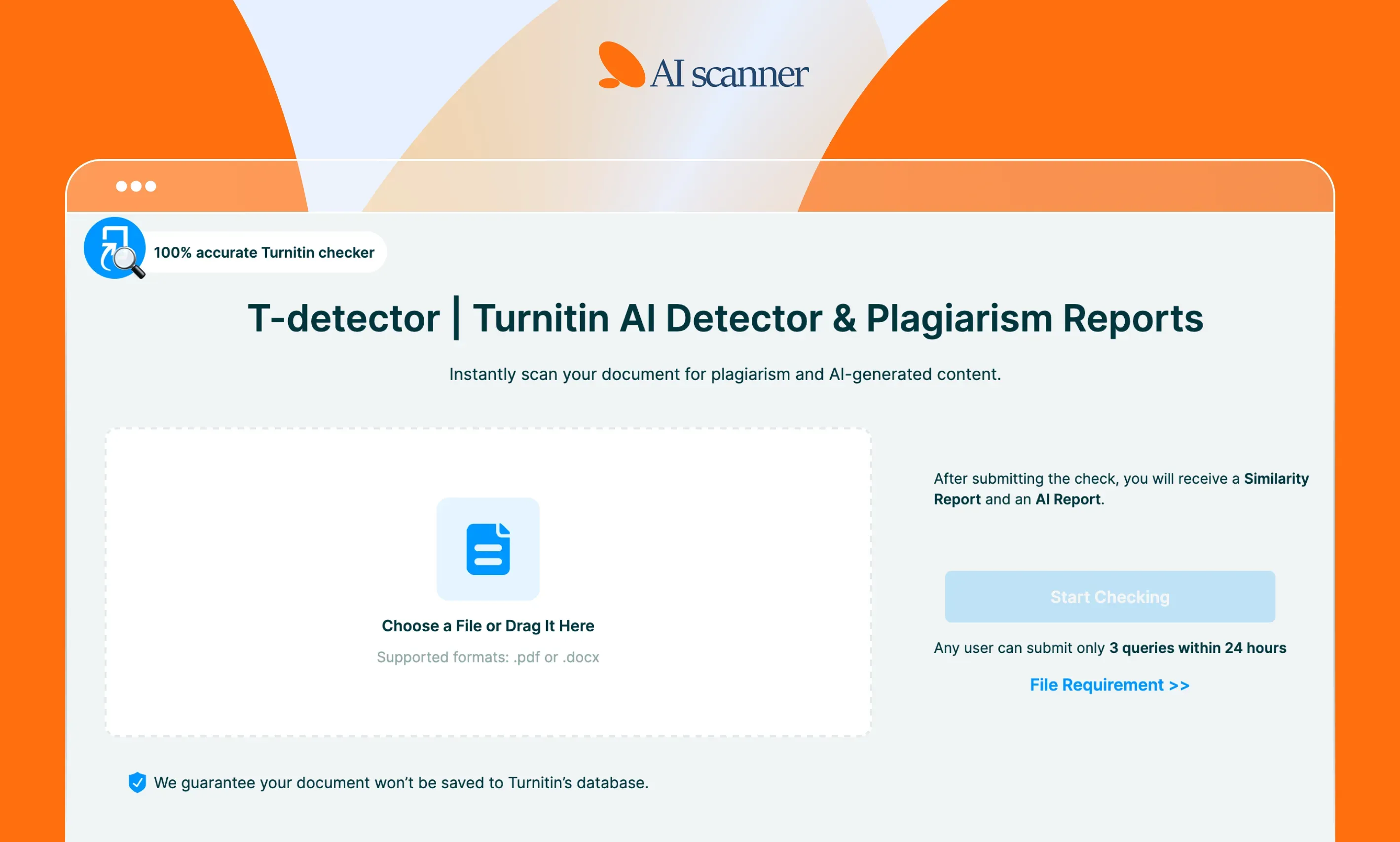
Turnitin is one of the most common AI detection tools used in higher education, but it can only be used by institutions, not by individual students. It works inside university systems and runs AI detection alongside plagiarism checks on student submissions.
Turnitin’s AI looks at sentence structure and language patterns linked to generative AI. External evaluations suggest its accuracy varies, often cited in the 60 to 80 percent range, with known issues around false positives and false negatives. Colleges use Turnitin for large-scale screening because it fits directly into academic platforms and helps support academic integrity policies across courses and departments.
Main advantages of Turnitin:
- Broad adoption across admissions offices and academic settings
- Combined plagiarism and AI content detection
- Familiar reporting format for faculty and reviewers
- Built-in alignment with institutional policies
3. GPTZero
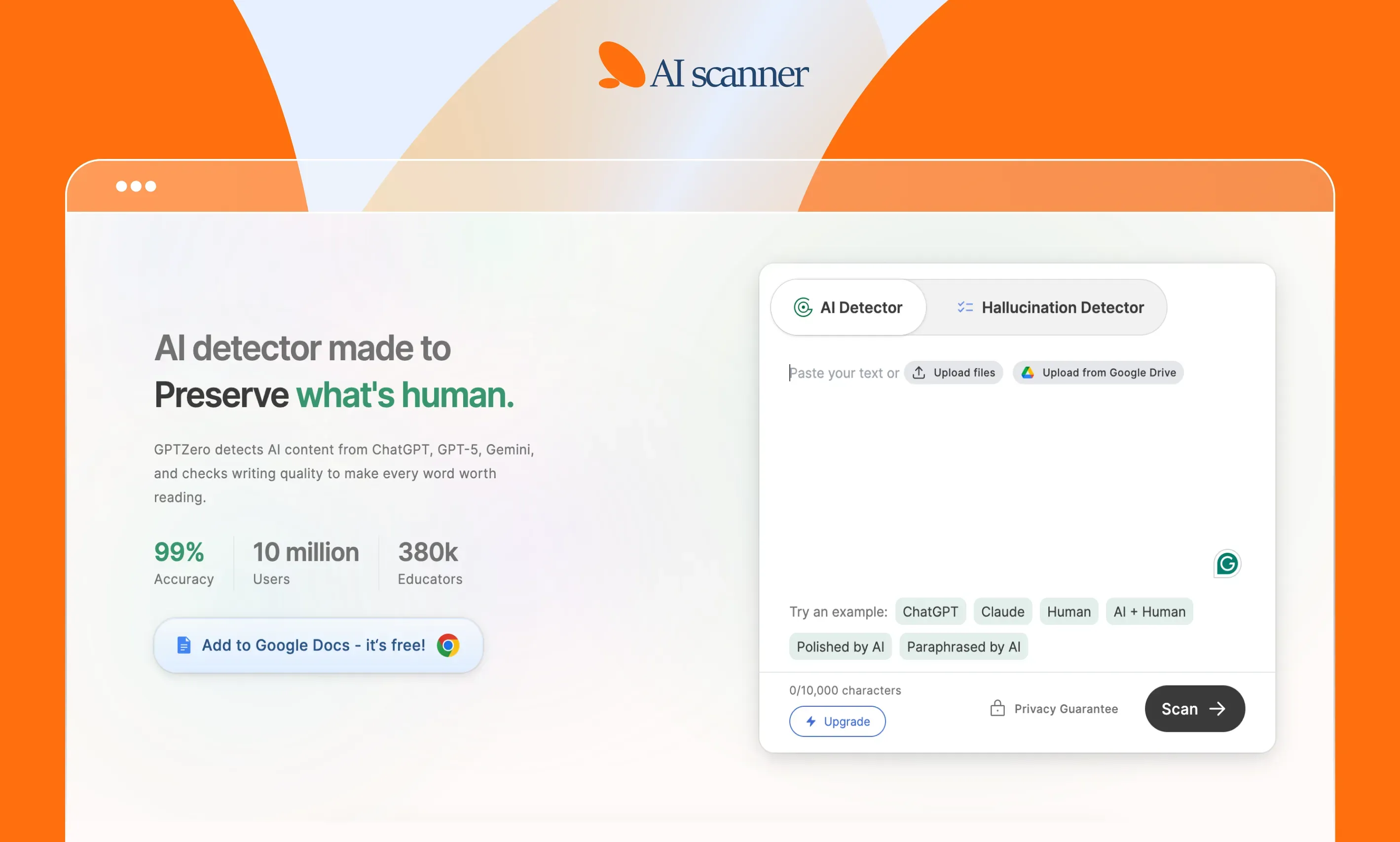
GPTZero focuses on identifying AI-generated text by measuring predictability and burst patterns associated with AI writing tools. Detection accuracy typically ranges from 65-78%, with variation based on topic, sentence length, and how heavily AI was used. Shorter college essays and early drafts tend to produce clearer signals. Longer reflective submissions can increase false positives, especially when advanced vocabulary appears.
GPTZero works best as a supplemental detection tool rather than a final authority. It's one of the tools colleges use to detect AI generated text and further guide human review, particularly when assessing student submissions that include personal anecdotes or unconventional structure.
Key benefits of GPTZero:
- Fast evaluation of AI-written text
- Clear probability-based scoring
- Useful for quick checks during the writing process
- Common reference among other AI detectors
4. Copyleaks
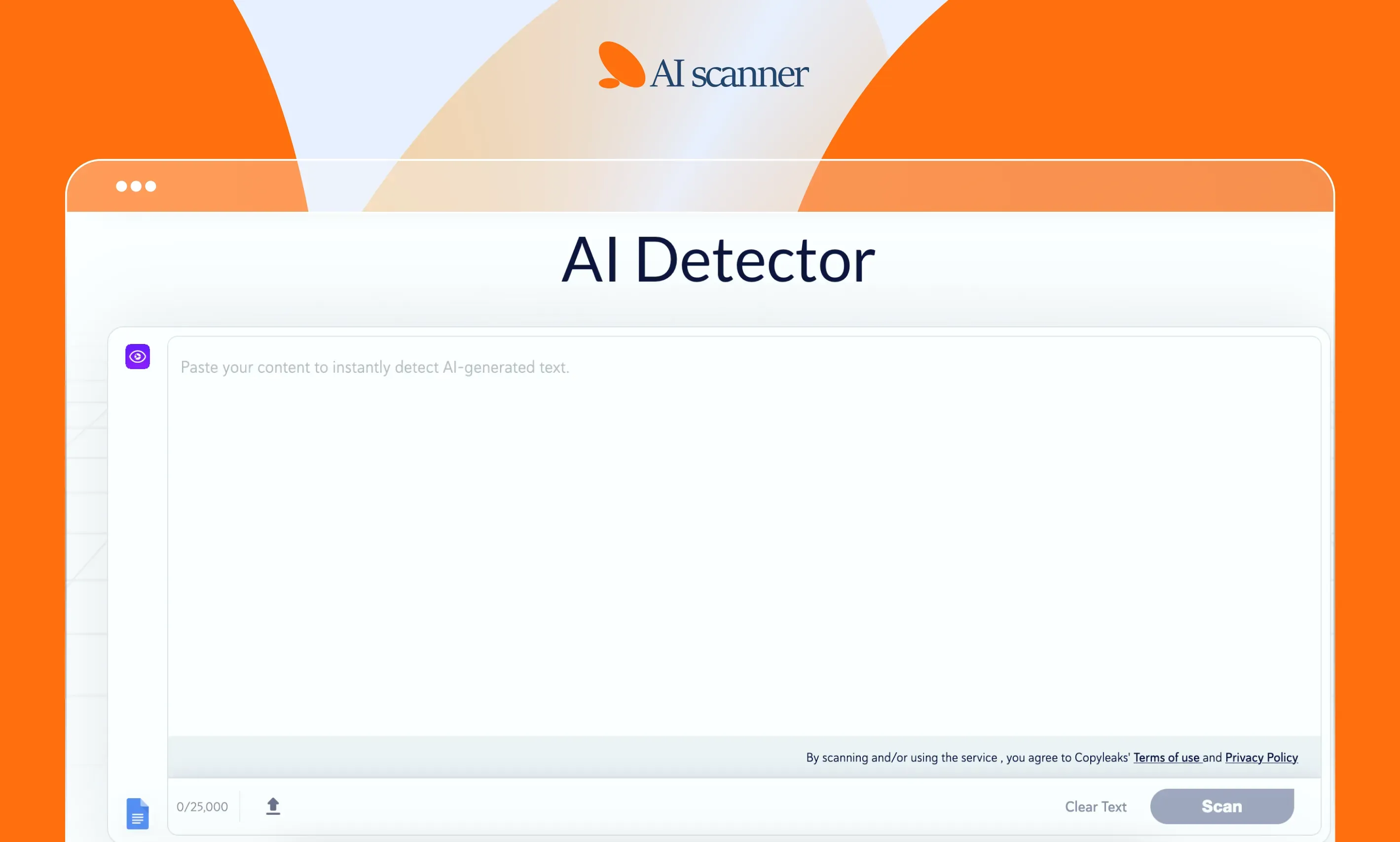
Copyleaks is commonly listed among AI detectors used in colleges, particularly in programs that already use plagiarism screening. It combines AI content detection with originality checks, which is useful for large numbers of student submissions.
The company reports up to 99% accuracy based on internal testing, while noting that results vary by text length, language, and level of AI assistance. Copyleaks works best for structured academic writing such as essays and reports. Institutions trust it because it integrates smoothly into academic systems and supports academic integrity without replacing human judgment.
Main advantages of Copyleaks:
- Vendor-reported AI detection accuracy up to 99 percent
- Combined plagiarism and AI content detection
- Multilingual support for diverse student submissions
- Scales easily across institutional workflows
5. Originality.AI
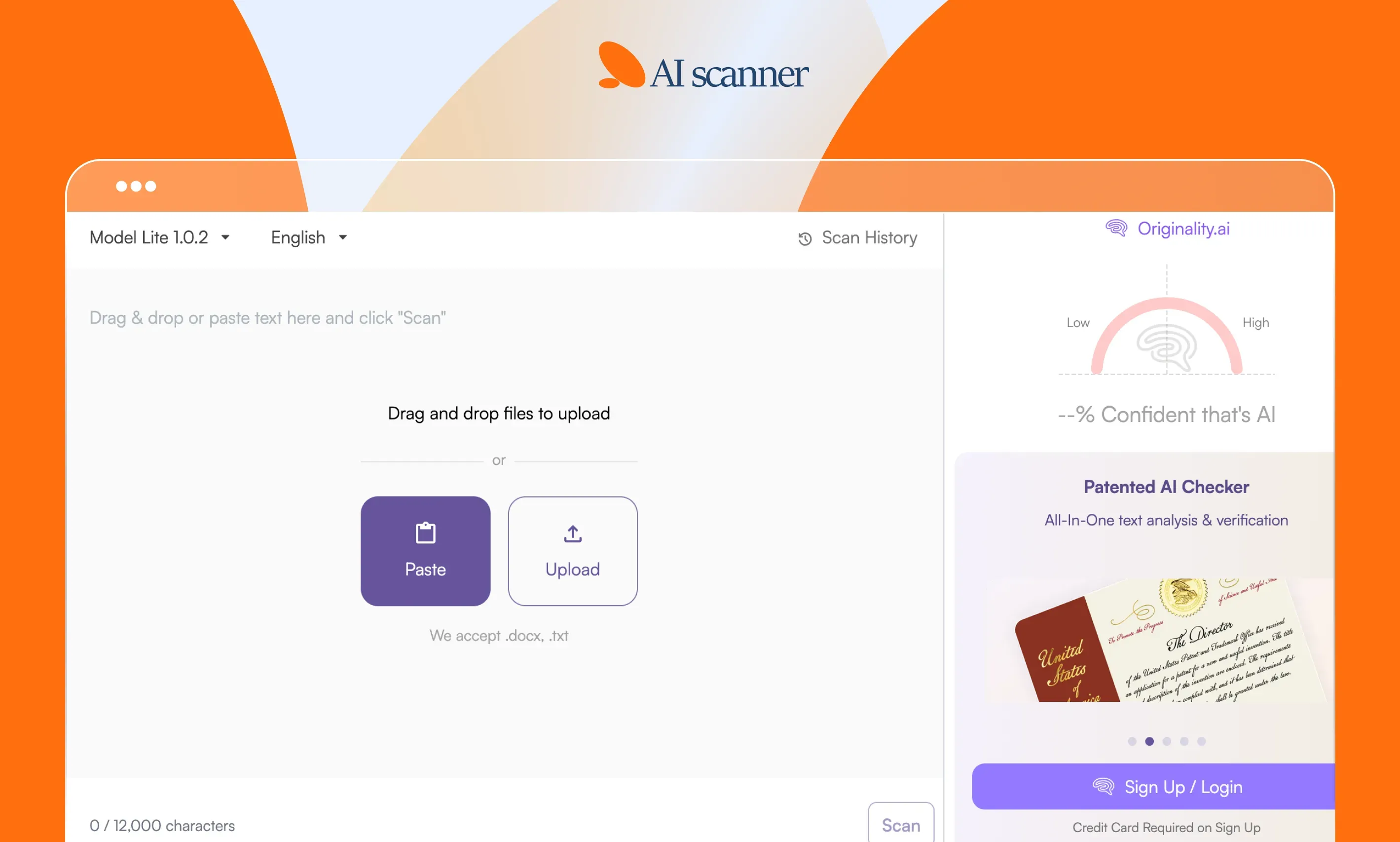
Originality.AI is often cited as an AI detector that colleges use when clarity about authorship matters. The tool focuses on identifying AI-generated writing and AI paraphrased text produced by large language models, with emphasis on longer documents. According to published benchmarks, the system reports up to 99% accuracy. Yet, the company acknowledges reduced reliability on short passages.
Originality.AI works best for extended essays, research drafts, and other long-form student work. Colleges rely on it because it highlights specific sections that raise concerns, which supports careful human review instead of blanket judgments about AI use.
Main advantages of Originality.AI:
- Vendor-reported detection accuracy up to 99 percent on long texts
- Strong performance on extended academic writing
- Clear section-level AI indicators
- Designed for authorship review and academic integrity support
6. Winston AI
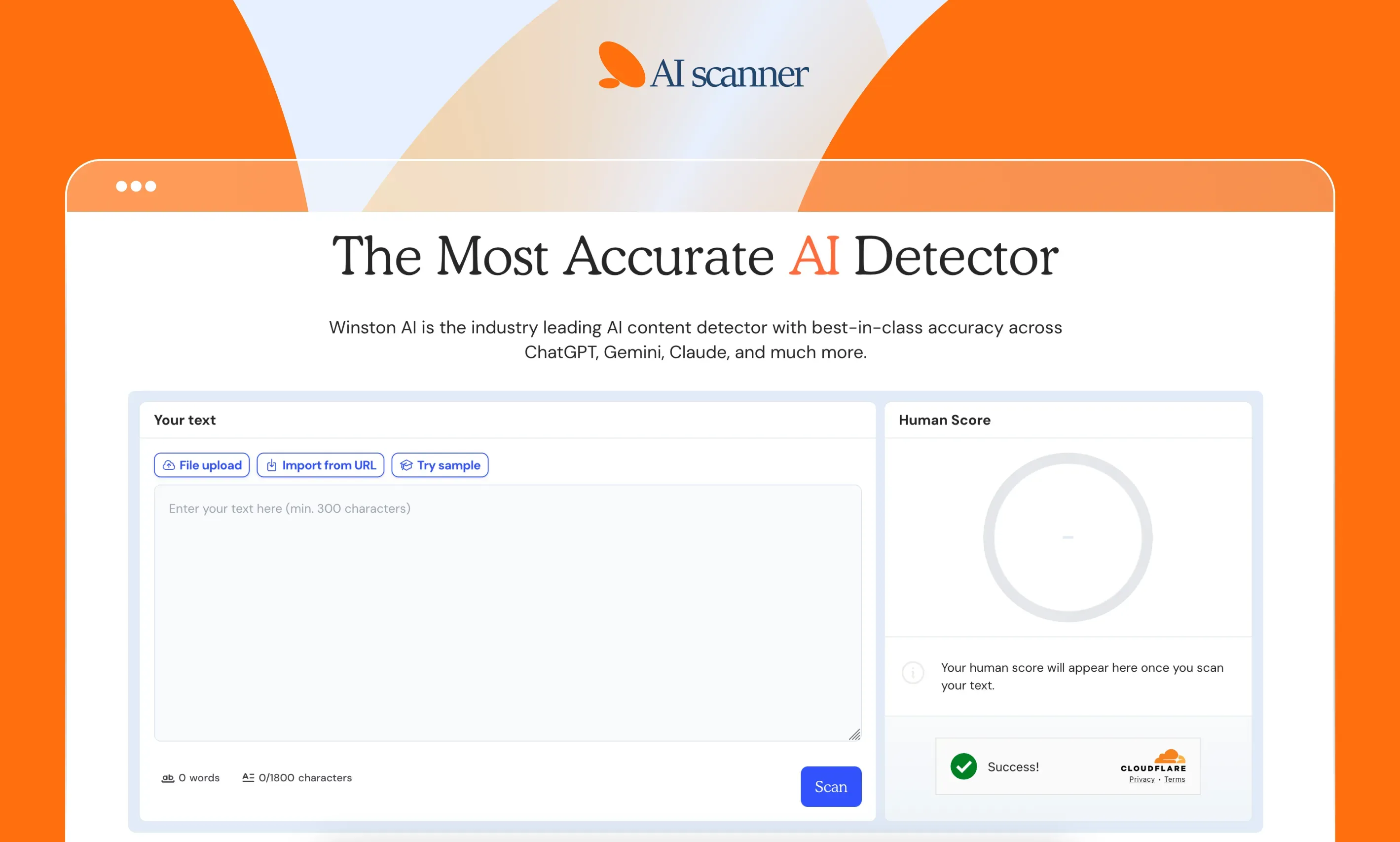
Winston AI shows up among AI detection tools used by colleges for screening written assignments and application materials. The platform reports accuracy in the 90% range based on internal evaluations shared by the company. Like all AI detectors, results vary with sentence length, writing style, and the degree of AI involvement during the writing process.
The tool suits college essays and other submissions where authorship questions may arise. Institutions trust Winston AI because it supports human review and avoids automated conclusions that could unfairly affect student work.
Main advantages of Winston AI:
- Vendor-reported accuracy in the mid-90 percent range
- Clear and accessible AI detection results
- Effective screening for AI-written text
- Appropriate for academic and admissions review contexts
Quick Comparison of AI Detectors Used by Colleges
Colleges rarely settle on a single detection system. In practice, they mix tools depending on context, volume, and risk level. Looking at AI detectors used by colleges side by side makes it easier to understand why results differ and why no score ever stands alone.
| Tool | Primary Features | Typical Use in Colleges | Pricing Model |
|---|---|---|---|
| AI Scanner | AI text detection with sentence-level explanations and academic focus | College essays, admissions writing, student submissions | Public access with optional paid features |
| Turnitin | Plagiarism detection with a built-in AI detection feature | Coursework review and institutional submissions | For institutional use only |
| GPTZero | Predictability and burst analysis for AI-written text | Supplemental screening and early-stage review | Free access with two paid plans for $23.99 and $45.99 |
| Copyleaks | AI content detection combined with plagiarism scanning | Academic assignments and multilingual submissions | Free access with two paid plans for $13.99 and $74.99 |
| Originality.AI | Detection of AI-generated and AI paraphrased content | Long-form academic writing and authorship checks | Paid access only, with one-time fee or subscriptions |
| Winston AI | Probability-based AI detection with readable reports | Admissions screening and academic review | Limited free access with 3 paid plans between $10-$26 |
What Other AI Detectors Do Schools Use for Research
Outside admissions review, colleges use AI detectors for research, pilot programs, and internal analysis. These tools tend to appear in studies about detection reliability rather than enforcement workflows.
Commonly referenced options include:
- Scribbr: Used in academic support research to examine plagiarism and AI detection behavior in student writing.
- Sapling: Used in linguistic and language research to analyze sentence patterns linked to AI-generated text.
- Grammarly: Studies how AI assistance affects drafting, revision habits, and writing style.
- BrandWell: Used in large-scale content analysis to evaluate patterns in AI-generated writing.
Bringing Everything Together
For AI detection, colleges most often use Turnitin. Yet, GPTZero, Copyleaks, AI Scanner Originality.AI are also frequently referenced. Ultimately, these results from these tools should be treated as early indicators of AI usage, rather than final verdicts. Detection accuracy shifts with writing style, length, and context, and false positives still remain a real concern. Human review is still important in higher education and college admissions.
If you need a reliable tool to make sure your writing is authentic, you can give AI Scanner a try. Our platform will let you know how your papers might be interpreted so you can protect your academic integrity.
Protect Your Integrity
Original work always beats AI-generated writing. Don’t risk getting flagged.
FAQ
Sources
- AI Tools for Education - Center for Teaching Excellence - The University of Utah. (2024). https://cte.utah.edu/instructor-education/ai-for-teaching.php
- Quinn, B. (n.d.). Guides: Artificial Intelligence Tools for Detection, Research and Writing: AI Detection. https://guides.library.ttu.edu/artificialintelligencetools/detection